Why Your Companies Knowledge Base Decides Your AI Visibility

Develomark • May 26, 2026
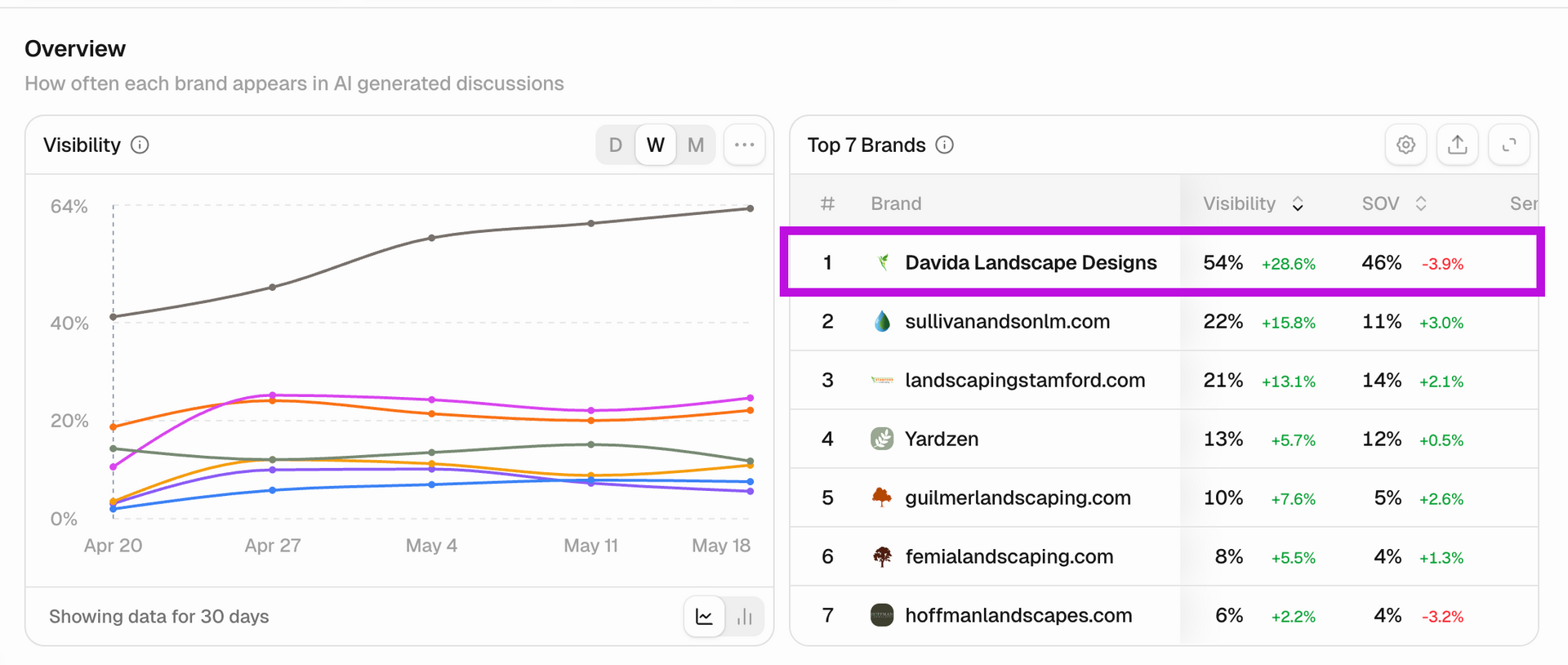
Analytics dashboard with line chart and ranked metrics table, top row highlighted in pink

Most Connecticut service businesses we talk to assume AI search is a content problem. It isn't. It's a data problem. The blog posts, service pages, and FAQs that get cited by ChatGPT, Claude, Perplexity, and Google AI Overviews are only as good as the raw business data feeding them — your calls, your forms, your customer emails, your team conversations.

At Develomark , we build AI SEO and AEO systems for service businesses across Hartford County and Connecticut. The pattern we see every week is the same: the businesses that win in AI search aren't the ones writing the most content. They're the ones with the cleanest knowledge base.

This guide breaks down what a "knowledge base" actually means for a small service business, why fresh data outperforms stale data in AI search, and how Connecticut businesses can start feeding their AI visibility engine today.

Why AI Search Rewards Businesses With Better Source Data

Annotated webpage screenshot with purple boxes highlighting text sections and a small chart.

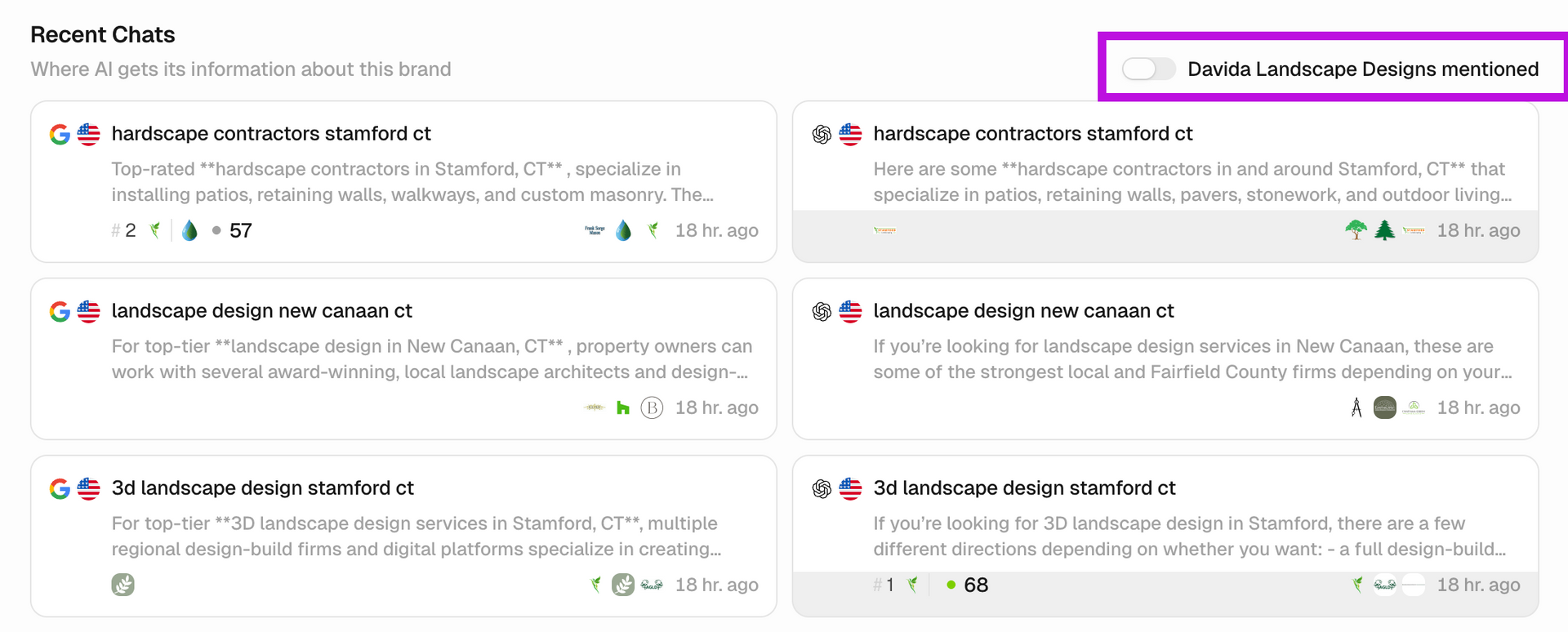
Every time an LLM generates an answer about a local service — "best house painters in Connecticut," "best moving companies in Southington," "kitchen remodeler in Meriden" — it pulls from whatever public information it can find about your business. That includes your website, your Google Business Profile, your reviews, and increasingly, the language patterns and customer questions it can stitch together from indexed content.

If the only thing the AI can find is a generic homepage and three thin service pages, it doesn't have enough signal to recommend you confidently. If it can find content that mirrors how your customers actually talk — the questions they ask on calls, the objections they raise in forms, the specifics of your service area — it has every reason to cite you in the answer.

The "Data In, Data Out" Principle

Social media comment page with four comment cards and a purple-highlighted button at top right

There's a simple rule we use internally: data in, data out. The quality of anything an AI produces — a blog post, an email, a service page — is capped by the quality of the data going into it. Garbage in, garbage out. Fresh, organized, customer-grounded data in, content that actually ranks and gets cited out.

For a Connecticut service business, the "data in" usually lives in five places: phone call transcripts, form submissions, customer emails, internal team conversations (Slack or similar), and your existing website content. Most businesses leave four of those five completely untouched.

Fresh Data Beats Old Data — Every Time

Information has a half-life. A pricing page written in 2022 isn't representative of what your customers are asking about today. A service area that listed three Connecticut towns two years ago might miss the seven new ones you actually cover now. The longer data sits, the less true it becomes — and AI engines reward content that reflects current reality.

This is why call recordings and form submissions are so valuable. They're real customer language, captured in the last 24 hours, telling you exactly what people in your service area want to know right now.

A Real Example: One Call, One Indexed Page, Real Bookings

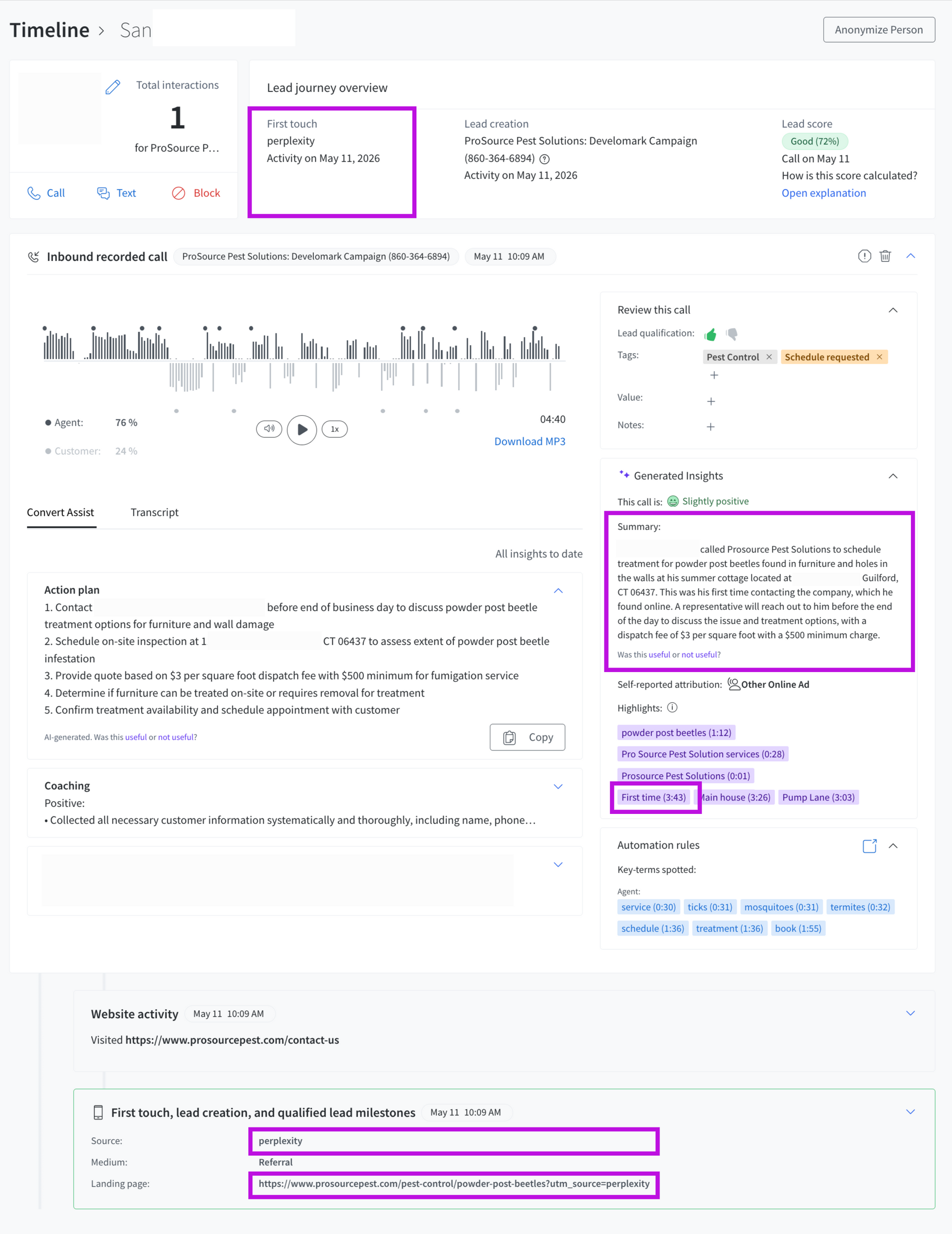
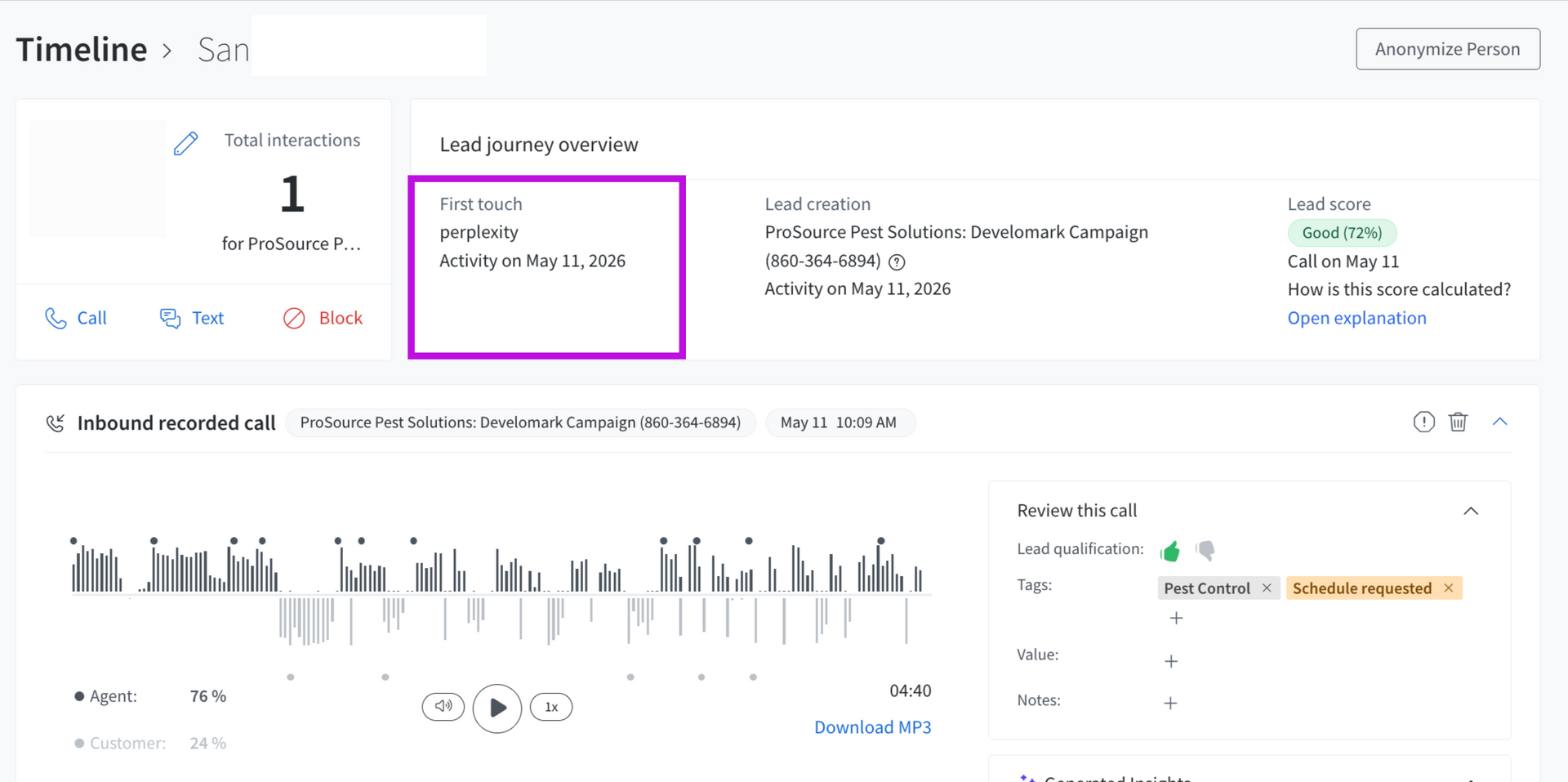
Analytics dashboard showing a timeline of daily activity and bar charts, with one card highlighted in purple.

Recently, a customer called one of our pest control clients and asked whether they could sell a home with active carpenter ants and what the warranty timeline looked like. That single call became a fully written, locally-relevant blog post — "Selling Your Home With Carpenter Ants: Warranty Timeline Guide" — that we transcribed, processed against the client's knowledge base, and published the same day. It was indexed the next morning and started showing up in AI search results almost immediately. No agency working under a billable-hour model can move that fast.

What Connecticut Service Businesses Should Actually Be Doing

If you run a service business in Connecticut and you want to be the company AI recommends, the work isn't "publish more blogs." It's "build a system that turns your real customer conversations into machine-readable content." Here's what that looks like in practice.

1. Capture Every Customer Conversation

Phone calls should be transcribed automatically. Form submissions should be tagged by topic. Customer emails should be searchable. None of this requires a giant tech stack — most Connecticut businesses we work with can do all three with tools they already pay for.

2. Build a Real Knowledge Base

A knowledge base is just the organized version of everything your business already knows. Your service area, your pricing logic, your warranty policies, your most common customer questions, your differentiators. Most small businesses keep this in their owner's head. AI can't read your head.

3. Turn Conversations Into Content — Fast

When a customer asks a real question, that question is the seed of a page. Connecticut service businesses that publish 30 to 50 customer-grounded pages per month dominate AI search in their local market. The ones publishing one blog post a month written by a generalist freelancer don't.

4. Measure What's Actually Getting Cited

"Showing up in Google" is no longer enough. You need to know how often your business is cited in ChatGPT, Claude, Perplexity, Gemini, and Google AI Overviews for the prompts your customers are actually using. We track this weekly across a 50-prompt set for every AI SEO client.

Frequently Asked Questions

What is a knowledge base in the context of AI SEO?

A knowledge base is a structured collection of your business's real information — service area, pricing, FAQs, policies, customer language, and operational details — that an AI system can use to generate accurate, locally-relevant website content. It's the source of truth behind everything your AEO system publishes.

Why does fresh data matter for AI search?

AI engines are designed to surface current, accurate information. Stale content gets deprioritized. Connecticut service businesses with regularly updated, customer-grounded content get cited more often than businesses with thin or outdated sites.

Can I do this in-house, or do I need an agency?

You can absolutely start in-house — transcribe calls, organize FAQs, and document your service area today. Most Connecticut service businesses bring in an agency like Develomark when they want the system automated end-to-end and tracked across every major LLM weekly.

Build the System That Gets Your Connecticut Business Cited

AI search isn't a content arms race — it's a data arms race. The Connecticut service businesses that win are the ones treating every customer call, every form submission, and every internal conversation as raw material for the next page AI is going to cite.

Book a free AI visibility audit with Develomark and we'll show you exactly how your business currently stands across ChatGPT, Claude, Perplexity, and Google AI Overviews — and what your knowledge base needs to look like to start getting cited.

European performance car in a clean service bay, illustrating an AEO and SEO website case study
By Develomark June 29, 2026
How Develomark built an AEO and SEO optimized website for a Connecticut European car service shop—FAQ schema, keyword headings, dynamic pages, and AI search wins.
Text “Optimizing for AI Search” above a row of AI and search engine logos on a pink gradient background
By Develomark May 26, 2026
More than a third of website visitors are now AI bots. Learn how Connecticut small businesses can optimize for ChatGPT, Claude, Perplexity, Gemini, and AI Overviews.
Two people in a bright therapy office, seated and talking with microphones and notebooks.
By Develomark May 19, 2026
Learn how a transcript-first culture helps Connecticut small businesses rank in AEO, AI search, and Google. Practical tools and steps you can start using today.
Portrait of Ava Creto with text: “Winter 2026 Developmark Cohort #2 Ava’s Experience,” Cheshire, CT
By Develomark May 10, 2026
Learn how Ava gained hands-on experience with SEO, AEO, client communication, ad campaigns, and strategy through Develomark’s marketing cohort program.
Winter 2026 title slide featuring Patryk Niciewicz, Plainville, CT, with portrait and “Developark Cohort #2” text
By Develomark May 10, 2026
Discover how Patrick used Develomark’s cohort program to gain experience with AI tools, client work, advertising, and entrepreneurship-focused marketing skills.
Portrait of Sam Church beside text: “Develmark Cohort #2: Sam’s Experience” and “Winter 2026”
By Develomark May 10, 2026
Learn how Sam used Develomark’s cohort program to expand from graphic design into client communication, advertising, strategy, and real-world agency experience.
Trainee in white jacket beside text: “Developr Cohort #2: Tralee’s Experience” and “Winter 2025”
By Develomark May 10, 2026
Learn how Develomark’s cohort program helped Tralee gain hands-on experience with SEO, AEO, content creation, client communication, and real marketing strategy.
Learn how Develomark helps businesses succeed in AI search with AI SEO, AEO, and GEO strategies that
By Ruan Marinho April 25, 2026
Learn how Develomark helps businesses succeed in AI search with AI SEO, AEO, and GEO strategies that drive visibility and trust.
By Ruan Marinho April 19, 2026
Learn how recent Google updates, AI search trends, and new tools like ChatGPT ads are impacting local businesses—and what you should do to stay competitive.
Four people stand under blue and green billboards reading “Bats?” and “Bugs?”
By Ruan Marinho April 19, 2026
Discover how Develomark used AI image generation to design high-impact billboards for a real client, improving speed, creativity, and results.
Show More