Meet Lauren Mahoney: The Designer Behind Develomark's Most Creative Risk

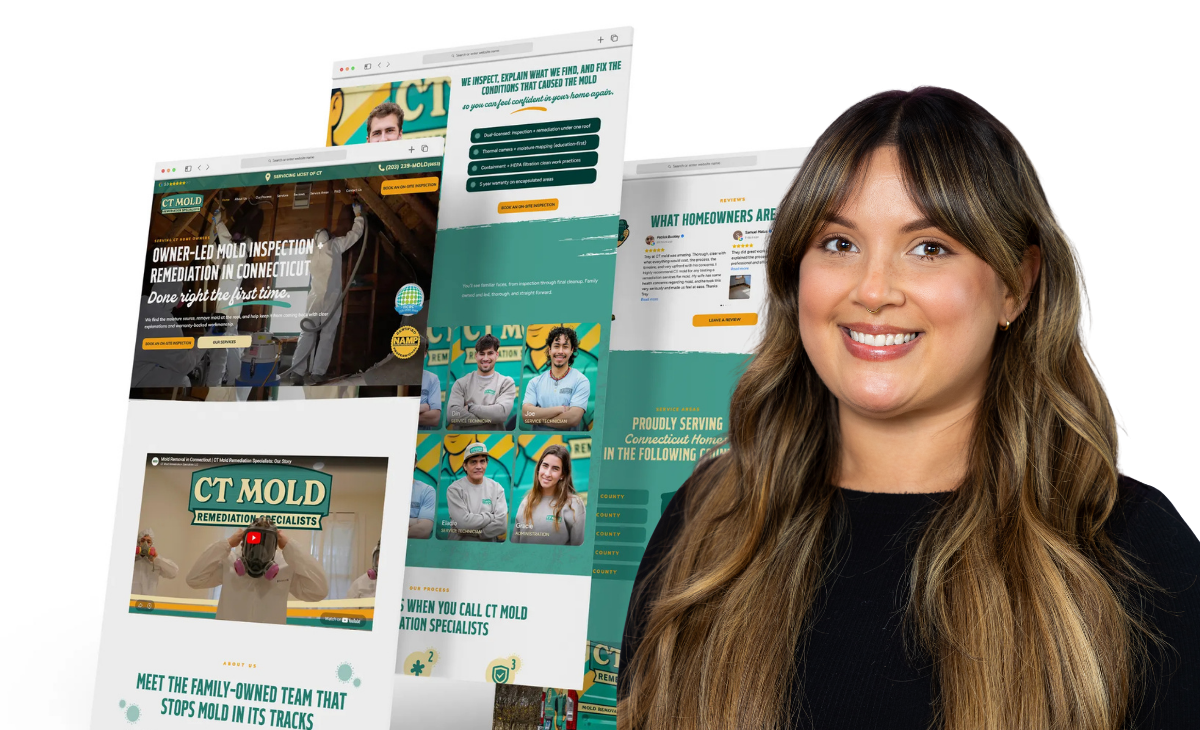
Behind every standout Develomark website is a designer who cares about the craft. Lauren Mahoney is one of those people — and her work on CT Moldman is the clearest example yet of what happens when a designer is given the brief, the trust, and the creative latitude to actually take a risk.
As a website and graphic designer at Develomark's Connecticut studio, Lauren works across web design, brand translation, and on-site production — including shoots. CT Moldman is her favorite project to date. Not because it was easy, but because it wasn't.
1. The Creative Risk That Made It Her Favorite
When Lauren names CT Moldman as her most creative build, the reason is specific: it's the project where the team pushed furthest from the safe middle. Most home services websites look roughly the same — clean, neutral, forgettable. CT Moldman doesn't look like any of them.
The client came in with a vintage-inspired brand already in place — distinct color palette, wrapped trucks, a personality that was playful and approachable in an industry that usually plays it straight. The brief wasn't to tone that down for a website. It was to lean into it.
That's a harder design problem than it sounds. Leaning into a fun brand without losing the credibility that converts anxious homeowners into actual leads — that tension is where the real design work happened. Every section, every font choice, every layout decision was tested against both sides of that question: Does this feel like them? And does this still close?
2. What the Client Already Had — and Why It Mattered
One thing that made this project move cleanly: CT Moldman arrived with strong existing assets. Their branding, their colors, their truck wraps — all of it was already defined and distinctive. That gave Lauren material to build off of rather than a blank page to fill.
For designers, that kind of asset clarity is rare at the home services level. Most small business clients are starting from scratch visually, which means the agency ends up making foundational brand decisions that should really come from the client. CT Moldman had already done that work, and it showed in the speed and confidence of the design process.
Nothing slowed this project down. The assets were there. The direction was clear. What remained was execution — translating a physical brand into a web experience that felt just as alive.
3. Getting On-Site: The Shoot That Changed the Feel
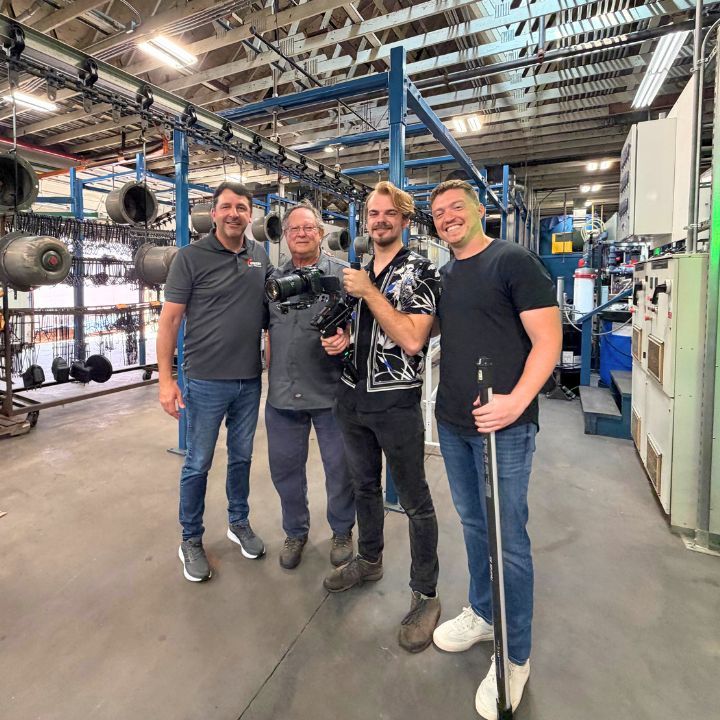
Lauren didn't just design the CT Moldman site remotely. She went on-site for the hero video and photo shoot — and that experience is part of why the final product feels like the brand rather than a template layered over it.
Meeting the CT Moldman team in person, understanding their energy and their sense of humor, gave Lauren a reference point that no brief can fully communicate. The site reflects not just their logo and colors, but their personality. That's the difference between a designed website and a right website.
Custom photography. Real team members. No stock imagery. When the client's reaction to the finished site was that it looked different from every other mold remediation website they'd seen — that's exactly why.
4. The Section Everyone Talks About
Ask Lauren what her favorite part of the CT Moldman site is, and the answer is immediate: the service area section. It has a digital, retro look — something she describes as reminiscent of the video game Fallout — that manages to be both functionally clear and visually distinctive at the same time.
For a Connecticut mold remediation company serving towns across Hartford County and beyond, communicating service area matters. Most sites do it with a plain list or a generic Google Maps embed. This section does it in a way that's actually worth stopping to look at — which is rare in home services, and rarer still in a category as utilitarian as mold remediation.
The Outcome: A Client Who's Too Busy to Check In
CT Moldman's reaction to the finished site was immediate enthusiasm — specifically that Develomark leaned into their brand rather than softening it. Combined with Develomark's ongoing advertising strategy, the site is performing well enough that the client stays consistently booked. They barely need to reach out.
That's the best outcome Lauren can describe: a client who's too busy to call because the work is doing its job.
Work With the Team Behind the Design
If you're a Connecticut business looking for a website that actually looks like your brand — not a template version of your industry — Develomark's design team is ready to build it. From initial concepts through launch and beyond, every project gets the same creative investment that went into Lauren's favorite builds.
Reach out to Develomark to start the conversation about your next website.
Frequently Asked Questions
What does a web designer at Develomark do?
Develomark designers handle the full visual layer of client projects — website design and development in Duda, graphic design for Meta and Google ad campaigns, and on-site production work including photo and video shoots.
How does Develomark approach brand-driven web design?
When a client arrives with a strong existing brand, Develomark's designers work to translate that identity into a website experience — not dilute it. The goal is a site that feels like the business, not like a category template.
What industries does Develomark design websites for?
Develomark works across home services, manufacturing, medical, dental, and professional services — with a particular focus on Connecticut small businesses looking to grow through web design, SEO, AEO, and digital advertising.
How does web design at Develomark connect to SEO and AI search?
Every site Develomark builds is structured to perform in both traditional Google search and AI-powered search — including ChatGPT, Perplexity, and Google's AI Overviews. Clean structure, well-organized content, and fast-loading visuals are core to every build.